How to Use an Angle Grinder
Overview
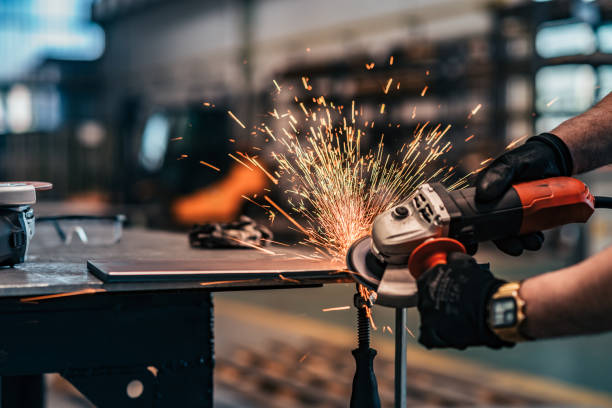
An angle grinder is a versatile power tool used for cutting, grinding, deburring, cleaning, and finishing metal.
With the correct disc, it can quickly remove rust, cut steel bars and profiles, smooth welds, prepare surfaces for welding, and restore old metal parts.
Because the disc rotates at very high speed, an angle grinder can also be extremely dangerous if used incorrectly. Always use the correct disc and safety equipment for the job.
What You Need
- Angle grinder
- Correct grinding or cutting disc
- Safety glasses
- Face shield
- Hearing protection
- Work gloves
- Appropriate work clothes
- Safety boots
- Clamps or a suitable workholding system
- Wire brush disc, when required
- Grinding disc, when required
- Cutting disc, when required
Choosing the Correct Disc
Different discs are designed for different jobs.
Cutting Disc
Used for cutting:
- Steel bars
- Metal tubing
- Flat bar
- Sheet metal
- Steel profiles
A cutting disc should normally be used with its edge, not its flat face.
Grinding Disc
Used for:
- Removing excess weld
- Shaping metal
- Smoothing rough edges
- Removing damaged material
Grinding discs are designed to withstand the forces involved in grinding.
Flap Disc
Useful for:
- Smoothing welds
- Removing surface material
- Finishing metal
- Preparing surfaces for painting
Flap discs allow more controlled material removal than aggressive grinding discs.
Wire Brush
Useful for:
- Removing rust
- Removing loose paint
- Cleaning weld areas
- Cleaning old metal
A wire brush is mainly a cleaning tool rather than a cutting or grinding tool.
Before You Start
1. Inspect the Grinder
Check:
- Power cable
- Plug
- Guard
- Handle
- Disc
- Disc mounting
- Switch
Do not use the grinder if important safety components are damaged or missing.
2. Inspect the Disc
Check for:
- Cracks
- Chips
- Severe wear
- Damage
- Incorrect disc type
Never use a damaged disc.
Make sure the disc’s maximum rated speed is suitable for your grinder.
3. Install the Guard
Keep the manufacturer’s guard installed and correctly positioned.
The guard helps protect you from sparks, fragments and accidental contact with the rotating disc.
4. Secure the Workpiece
Clamp the metal firmly.
Never hold a small metal part in one hand while operating the grinder with the other.
A moving workpiece can cause the grinder to jump or the disc to bind.
How to Use an Angle Grinder
Step 1 — Prepare Your Workspace
Remove flammable materials from the area.
Make sure sparks cannot reach fuel, solvents, wood, paper or other combustible materials.
Ensure that you have stable footing and enough space to control the tool.
Step 2 — Put on Safety Equipment
Wear:
- Safety glasses
- Face protection
- Hearing protection
- Gloves
- Suitable clothing
- Safety footwear
Never rely on ordinary sunglasses for eye protection.
Step 3 — Hold the Grinder Correctly
Use both hands whenever possible.
Keep a firm grip and position your body so that you are not directly in line with the disc.
Step 4 — Start the Grinder
Allow the disc to reach full operating speed before contacting the material.
Do not force the disc into the workpiece.
Step 5 — Let the Tool Do the Work
Apply controlled pressure.
If you have to push extremely hard, you may be using the wrong disc or technique.
Step 6 — Move Smoothly
Keep the grinder moving instead of staying in one location for too long.
This helps prevent excessive heating and unwanted grooves.
Step 7 — Finish the Operation
Release pressure and allow the disc to stop according to the manufacturer’s instructions.
Do not put the grinder down while the disc is still rotating.
Cutting Metal
When cutting metal with a cutting disc:
- Mark the cutting line.
- Secure the workpiece.
- Position yourself safely.
- Start the grinder.
- Allow the disc to reach full speed.
- Approach the material carefully.
- Keep the cut controlled and straight.
- Do not twist or force the disc.
- Complete the cut.
- Allow the disc to stop before setting the grinder down.
Important
Never use the flat side of a thin cutting disc for grinding.
Cutting discs are designed for cutting. Using them for side grinding can damage the disc and increase the risk of failure.
Grinding a Weld
An angle grinder is very useful for cleaning up welds.
- Allow the weld to cool.
- Remove heavy spatter if necessary.
- Start with an appropriate grinding or flap disc.
- Keep the grinder moving.
- Remove material gradually.
- Stop frequently and inspect the joint.
- Switch to a finer abrasive for finishing if required.
Do not automatically grind a structural weld completely flat.
Removing too much weld material can weaken the joint.
Removing Rust
A wire brush disc can quickly remove loose rust and scale.
For heavily rusted metal:
- Secure the part.
- Start the grinder.
- Work gradually across the surface.
- Avoid staying in one location too long.
- Inspect the metal after cleaning.
For serious corrosion, determine whether enough sound metal remains before attempting a repair.
Useful Tricks
Make a Shallow First Cut
When cutting thick material, a controlled initial groove can help establish the cutting path.
Do not force the disc deeper than necessary.
Mark Both Sides
When cutting tubing or angle iron, mark the cutting line around the material.
This makes it easier to keep the cut square.
Use a Guide When Appropriate
For repetitive straight cuts, a suitable mechanical guide or fixture can improve consistency.
Never create a guide that interferes with the disc or compromises control of the grinder.
Keep Spare Discs
Different jobs require different discs.
Changing to the correct disc is usually better than trying to make one disc do everything.
Use a Flap Disc for Finishing
If you need to make a weld or metal surface smoother, a flap disc can provide much better control than an aggressive grinding disc.
Applications
An angle grinder can be used for:
- Cutting steel
- Cutting metal tubing
- Grinding welds
- Removing rust
- Removing old paint
- Cleaning weld areas
- Deburring sharp edges
- Preparing metal for welding
- Smoothing rough surfaces
- Sharpening some tools with suitable techniques
- Preparing metal for painting
- Restoring old metal parts
Example Project — Making a Simple Metal Bracket
You can use an angle grinder to make a small steel bracket.
Step 1
Mark the required dimensions on the steel.
Step 2
Secure the steel firmly.
Step 3
Cut the piece using an appropriate cutting disc.
Step 4
Remove sharp edges with a suitable grinding or flap disc.
Step 5
Drill mounting holes using a drill.
Step 6
Clean the surface.
Step 7
Paint or protect the finished bracket against corrosion.
This combines several basic metalworking skills into one simple project.
Common Beginner Mistakes
Using the Wrong Disc
A cutting disc, grinding disc and wire brush are not interchangeable.
Removing the Guard
Never remove the manufacturer’s safety guard simply to make the tool easier to use.
Excessive Pressure
Forcing the grinder can make the disc bind, overheat or wear prematurely.
Twisting a Cutting Disc
A thin cutting disc can be damaged if it is twisted inside the cut.
Poor Workholding
If the workpiece moves, the grinder can suddenly change direction.
Grinding Too Much
It is easy to remove metal faster than intended.
Work gradually and inspect the surface regularly.
Ignoring Sparks
Sparks can travel a considerable distance and ignite combustible materials.
Safety
Kickback
Kickback can occur when the disc catches, binds or becomes obstructed.
The grinder can suddenly move toward the operator.
Maintain a firm grip, keep the workpiece secure and avoid positions where a kickback could send the tool directly into your body.
Disc Failure
A damaged or incorrectly rated disc can break apart at high speed.
Use only discs appropriate for the tool and operation.
Inspect discs before use.
Eye and Face Protection
Flying particles can cause serious eye injuries.
Use appropriate safety glasses and a face shield when required.
Hearing Protection
Angle grinders can produce very high noise levels.
Use suitable hearing protection.
Sparks and Fire
Keep flammable materials away from the work area.
Remember that sparks can remain hot after they stop visibly glowing.
Dust and Fumes
Grinding can produce hazardous dust, particularly when working on coated or unknown materials.
Use appropriate ventilation and respiratory protection where required.
Do not grind materials with unknown hazardous coatings without first determining what they contain.
Electrical Safety
Keep electrical equipment away from water.
Do not use damaged cables or plugs.
Disconnect the tool from power before changing accessories on corded equipment.
Pro Tips
- Always use the correct disc for the job.
- Inspect every disc before installation.
- Keep the guard installed.
- Secure the workpiece properly.
- Use both hands to control the grinder.
- Let the disc reach full speed before contacting the material.
- Do not force the tool.
- Keep cutting discs straight in the cut.
- Grind gradually rather than removing large amounts of material at once.
- Keep sparks away from people, vehicles and flammable materials.
- Check the manufacturer’s instructions for your specific grinder and accessories.
Beginner Practice Exercise
Start with a piece of scrap mild steel.
Practice:
- Removing surface rust with a wire brush.
- Cleaning the metal.
- Making a straight cut with a suitable cutting disc.
- Removing the sharp edge.
- Grinding a small weld with a flap or grinding disc.
- Finishing the surface without removing excessive material.
The goal is to learn control, not speed.
A good operator should be able to make the grinder remove exactly the amount of material intended.