How to Use a Metal Cutting Saw
Overview
A metal cutting saw is designed to cut steel, aluminum and other suitable metals into accurate lengths.
Depending on the machine, metal cutting saws can use abrasive discs, toothed blades or specialized cutting systems. They are useful for preparing tubing, angle iron, flat bar, pipes and other metal stock.
A good metal cut starts with accurate measuring, secure workholding and the correct blade or disc.
What You Need
- Metal cutting saw
- Correct blade or cutting disc
- Machine vice or suitable clamp
- Safety glasses
- Face shield when required
- Hearing protection
- Work gloves when appropriate
- Safety footwear
- Measuring tape or ruler
- Marker or scribe
- Square
- File or deburring tool
Before You Start
1. Inspect the Saw
Check:
- Power cable
- Switch
- Blade or cutting disc
- Blade guard
- Machine vice
- Clamps
- Base and mounting
- Cutting mechanism
Do not use the saw if a critical safety component is damaged or missing.
2. Choose the Correct Blade
The blade must be suitable for:
- The material
- Material thickness
- Machine
- Cutting method
Never use a blade that is not rated for your machine.
3. Measure the Material
Measure carefully and mark the cutting line.
For square cuts, use a combination square or similar tool.
Remember:
Measure twice, cut once.
4. Secure the Workpiece
Clamp the material firmly in the machine vice.
The material should not move during cutting.
Long pieces may also require additional support.
Safety
Eye and Face Protection
Wear suitable safety glasses.
A face shield may provide additional protection from sparks and flying fragments.
Keep Guards Installed
Never remove or disable the blade guard.
The guard is designed to reduce exposure to the rotating cutting tool.
Secure the Material
Never hold metal by hand while cutting with a powered metal saw.
The material can move suddenly and cause the blade to bind.
Keep Hands Away
Keep your hands away from the blade and cutting zone.
Never reach underneath or behind the blade while it is moving.
Avoid Loose Clothing
Keep loose sleeves, jewelry and long hair away from moving parts.
Sparks and Fire
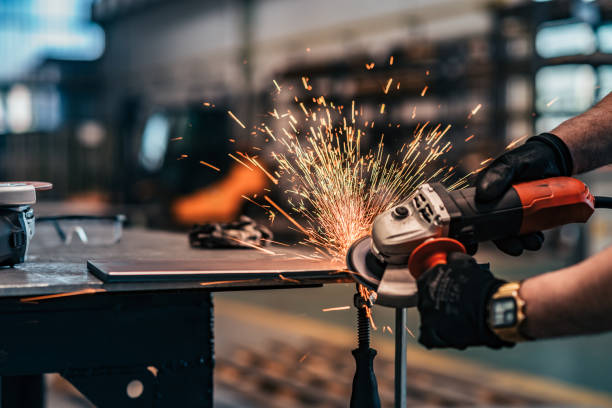
Some metal cutting saws produce large amounts of sparks.
Keep flammable materials away from the cutting area.
Check where sparks will travel before starting.
Hearing Protection
Metal cutting machines can produce high noise levels.
Use appropriate hearing protection.
Wait for the Blade to Stop
After completing a cut, keep the saw in position until the blade has completely stopped.
Do not move the workpiece while the blade is still rotating.
How to Use a Metal Cutting Saw
Step 1 — Measure
Measure the required length carefully.
Mark the exact cutting line.
Step 2 — Check the Cut
Before starting, verify that the marked line is correct.
Make sure you are accounting for the location of the cut and the amount of material that will be removed.
Step 3 — Position the Material
Place the workpiece in the vice.
Position the cutting line correctly under the blade.
Step 4 — Clamp the Material
Tighten the vice firmly.
For long material, provide additional support so that the piece cannot fall or rotate unexpectedly.
Step 5 — Check the Blade
Make sure the correct blade is installed and properly secured.
Step 6 — Put on PPE
Wear the required eye, face and hearing protection.
Step 7 — Start the Machine
Stand in a stable position.
Start the saw and allow it to reach normal operating speed when applicable.
Step 8 — Make the Cut
Lower the cutting head smoothly.
Do not force the blade through the material.
Allow the blade to cut at its intended rate.
Step 9 — Finish the Cut
As the blade approaches the end of the material, maintain control and avoid sudden pressure.
Step 10 — Inspect the Cut
Wait until the blade has stopped.
Remove the material and inspect:
- Length
- Squareness
- Burrs
- Surface condition
- Heat damage
Deburr the finished piece if necessary.
Making a Square Cut
A square cut is extremely important when building metal frames.
To improve accuracy:
- Mark the material using a square.
- Position the material correctly in the vice.
- Check that the material is sitting flat.
- Clamp it firmly.
- Make the cut without forcing the blade.
- Check the finished end with a square.
A small error repeated across several pieces can make an entire frame difficult to assemble.
Cutting Tubing
When cutting square or rectangular tubing:
- Mark the cut around the tube when possible.
- Make sure the tubing is properly supported.
- Clamp it so it cannot rotate.
- Use the correct blade.
- Check the first cut before producing multiple pieces.
For repeated cuts, create a reliable stop or measuring system rather than measuring every piece from scratch.
Cutting Angle Iron
Angle iron can move or rotate if it is not positioned correctly.
Place it so that the machine’s vice can hold it securely.
Make sure the cutting line is fully supported.
Never rely on your hand to stabilize the piece.
Cutting Thin Sheet Metal
Thin sheet metal may require different equipment from thick steel stock.
Use a blade specifically intended for the material and machine.
For very thin sheet, another cutting method may provide better control and a cleaner result.
Applications
A metal cutting saw is useful for:
- Steel tubing
- Square tubing
- Rectangular tubing
- Angle iron
- Flat bar
- Round bar
- Metal pipe
- Workshop frames
- Brackets
- Furniture frames
- Gates
- Welding projects
- Machine stands
- Shelving systems
Example Project — Simple Steel Frame
A small steel frame is an excellent project for learning accurate cutting.
Step 1
Choose the required tubing size.
Step 2
Calculate the length of every piece.
Step 3
Mark the first piece.
Step 4
Cut it accurately.
Step 5
Use the first piece as a reference for repeated components when appropriate.
Step 6
Cut the remaining pieces.
Step 7
Check that matching pieces have the same length.
Step 8
Arrange the pieces and check the diagonals.
Step 9
Tack weld the frame.
Step 10
Check the dimensions again before completing the welds.
Useful Tricks
Make a Cutting List
Before starting a project, write down every required piece.
For example:
- 4 × 500 mm
- 2 × 300 mm
- 2 × 700 mm
This reduces mistakes and makes material planning easier.
Cut Similar Pieces Together
If several parts have the same length, organize your workflow so you can produce them consistently.
Always verify your setup before making the whole batch.
Use a Stop
For repeated cuts, a suitable adjustable stop can make every piece the same length.
This is much faster and more accurate than repeatedly measuring with a tape measure.
Deburr Immediately
After cutting, remove dangerous burrs before moving the material around the workshop.
Save Offcuts
Short pieces of clean metal can be useful for:
- Test welds
- Small brackets
- Welding practice
- Jigs
- Spacers
- Templates
Do not keep unusable scraps simply because they are metal.
Pro Tips
- Make a cutting list before starting.
- Measure from the same reference point every time.
- Use a square for accurate marks.
- Clamp the workpiece firmly.
- Support long material.
- Use the correct blade for the material.
- Do not force the blade.
- Check the first finished piece before making a batch.
- Use a stop for repeated cuts.
- Deburr freshly cut metal.
- Keep useful offcuts organized by size.
- Plan your cuts to minimize material waste.
Common Beginner Mistakes
Cutting Without Measuring Properly
A bad measurement can waste an entire piece of expensive metal.
Poor Workholding
If the material moves during cutting, the cut can become inaccurate and the blade can bind.
Using the Wrong Blade
The wrong blade can cut poorly, overheat or become damaged.
Forcing the Saw
Excessive pressure does not necessarily make cutting faster.
It can increase heat, wear and the chance of binding.
Forgetting the Cutting Line
Always check exactly where the blade will enter the material before starting.
Ignoring Burrs
Freshly cut metal can have extremely sharp edges.
Cutting Long Material Without Support
Long stock can shift, fall or rotate when the cut is completed.
Beginner Practice Exercise
Take several pieces of scrap square tubing.
Practice:
- Measuring 100 mm.
- Marking the cut with a square.
- Securing the tubing.
- Making the cut.
- Checking the length.
- Checking the cut with a square.
- Deburring the edge.
Then try producing five pieces of exactly the same length.
The goal is to develop accurate measuring, secure workholding and consistent cutting.
Once you can repeatedly produce accurate pieces, use the same technique when preparing material for a welded frame.