Overview
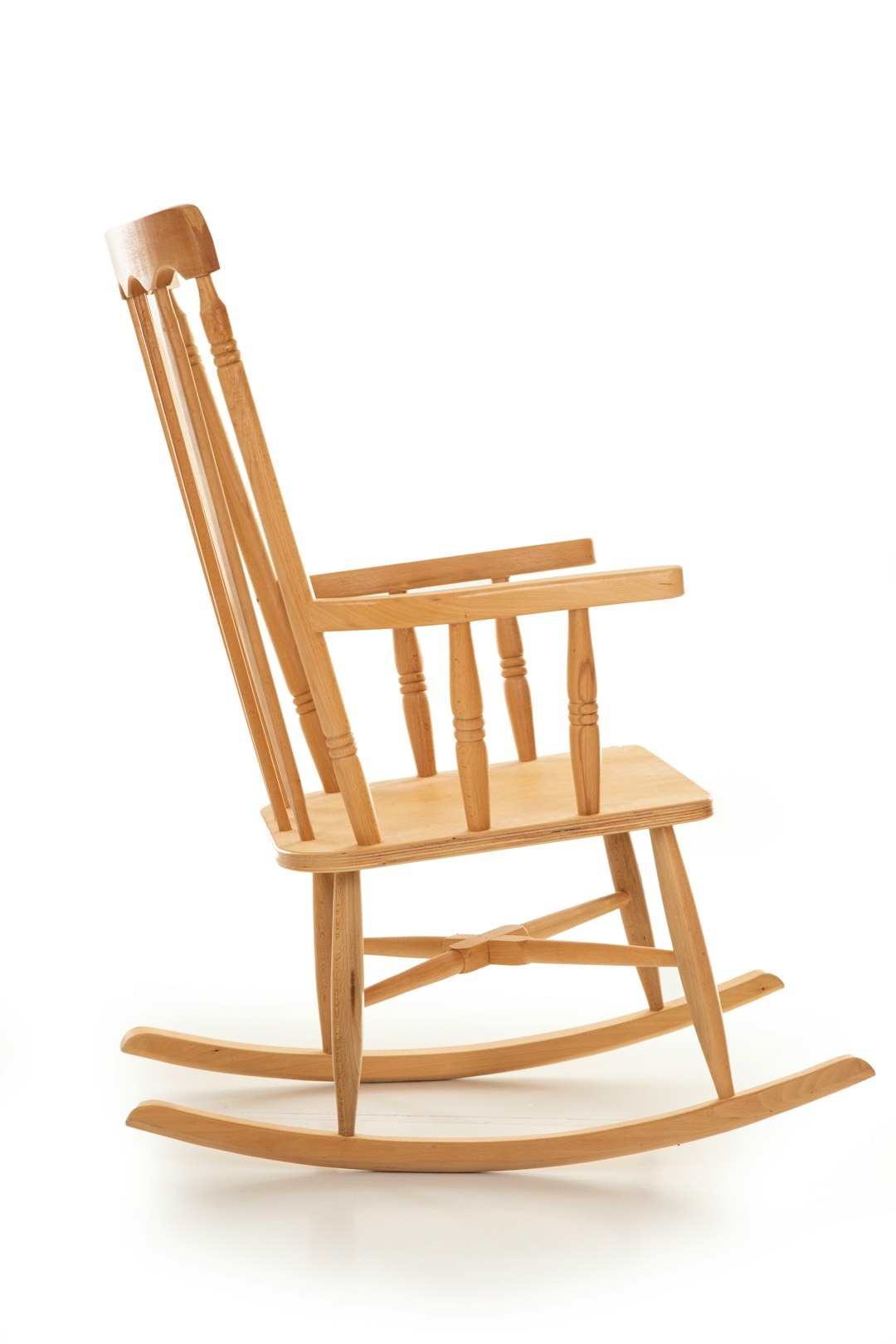
A rocking chair is one of the more demanding furniture projects because the entire chair must remain balanced while rocking.
This guide uses a simple design approximately 65 cm wide, 85 cm deep and 110 cm high, with a seat around 45 cm above the floor.
Difficulty: Hard
Estimated Time: 15–25 hours
Materials
- Hardwood boards
- Hardwood for rocking runners
- Wood glue
- Screws or suitable joinery
- Sandpaper
- Wood finish
- Optional upholstery
Tools
- Measuring tape
- Carpenter’s square
- Saw
- Jigsaw or bandsaw
- Chisels
- Drill
- Clamps
- Sander
- Level
Recommended Dimensions
- Width: 65 cm
- Depth: 85 cm
- Height: 110 cm
- Seat height: 45 cm
- Seat depth: 45–50 cm
- Backrest angle: approximately 10–12° backward
- Runner width: approximately 5–7 cm
Tips
- Make both rocking runners identical.
- Never guess the runner curve.
- Test the rocking motion before final finishing.
- Keep the center of gravity low.
- Round all contact edges carefully.
Safety
Work slowly when cutting curved runners. Support large workpieces securely and wear eye protection.
Steps
Step 1 — Design the Chair
Draw the side profile of the chair.
Mark the seat height at approximately 45 cm and the backrest angle at approximately 10–12° backward.
Draw both runners from the same template.
Tip: Make a full-size paper or cardboard template before cutting expensive hardwood.
Step 2 — Cut the Runners
Transfer the template onto the hardwood.
Cut both runners.
Place them together and clamp them so you can compare their shapes.
Tip: The two runners should be as close to identical as possible. Differences can make the chair rock unevenly.
Step 3 — Build the Seat Frame
Construct the seat frame around approximately 45–50 cm deep.
Keep the frame square.
Dry-fit the components.
Tip: Sit on a temporary chair beside the frame to judge whether the planned seat height and depth feel comfortable.
Step 4 — Install the Legs
Attach the legs between the seat frame and runners.
Keep the structure symmetrical.
Check both sides with the same measurements.
Tip: Measure from the runner to the seat on both sides. Matching measurements are more useful than trying to judge symmetry visually.
Step 5 — Install the Backrest
Build the backrest frame.
Angle it approximately 10–12° backward.
Secure the structure to the rear legs.
Tip: Clamp the backrest temporarily and test the sitting position before permanently fixing it.
Step 6 — Test the Rocking Mechanism
Place the unfinished chair on a flat surface.
Rock it gently.
The movement should be smooth and controlled.
If one side touches the floor earlier than the other, inspect the runners.
Tip: Do not sand a runner randomly. Mark the high point first and remove material gradually.
Step 7 — Sand
Sand the chair from 120 to 220 grit.
Round all edges that can contact the user’s hands, legs or clothing.
Tip: Pay particular attention to the front of the armrests and seat edges.
Step 8 — Finish
Move the chair into a clean, dry and well-ventilated room.
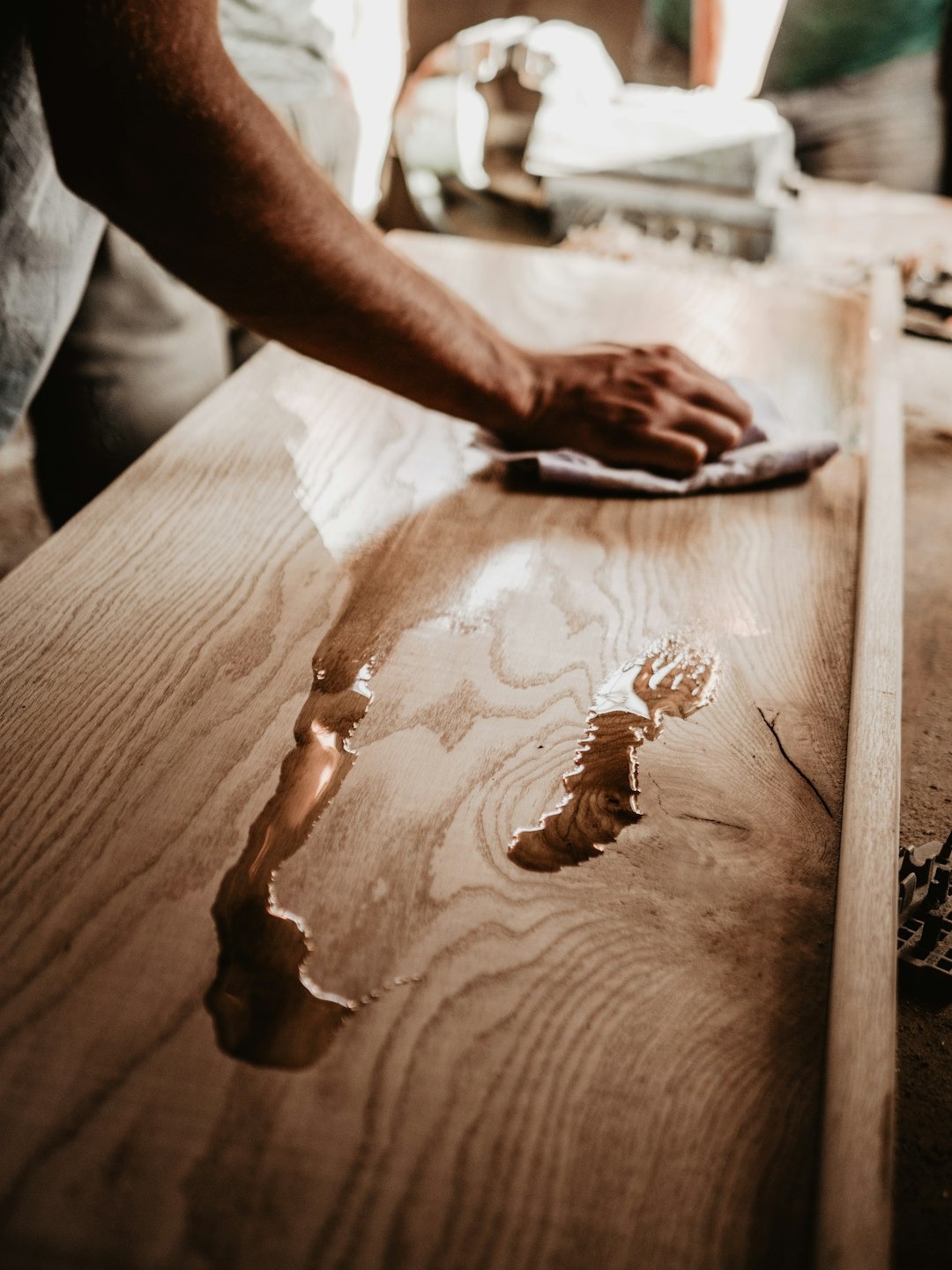
Apply thin coats of finish.
Allow them to cure completely.
Tip: Test the rocking action only after the finish has fully cured. Wet or soft finish can be damaged by repeated movement.
Step 9 — Final Test
Rock the chair gradually.
Check:
- Smooth movement
- Equal runner contact
- No cracking
- No loose joints
- Stable stopping position
Tip: If the chair rocks too aggressively or feels unstable, stop using it and correct the runner geometry before putting it into normal use.